

Healthy ageing is often presented as a matter of individual responsibility. The dominant narrative focuses on lifestyle choices: move more, eat better, manage stress, stay socially active. While these behaviours are important, this framing is incomplete — and ultimately misleading.
Healthy ageing is not determined primarily by individual willpower. It is shaped by systems.
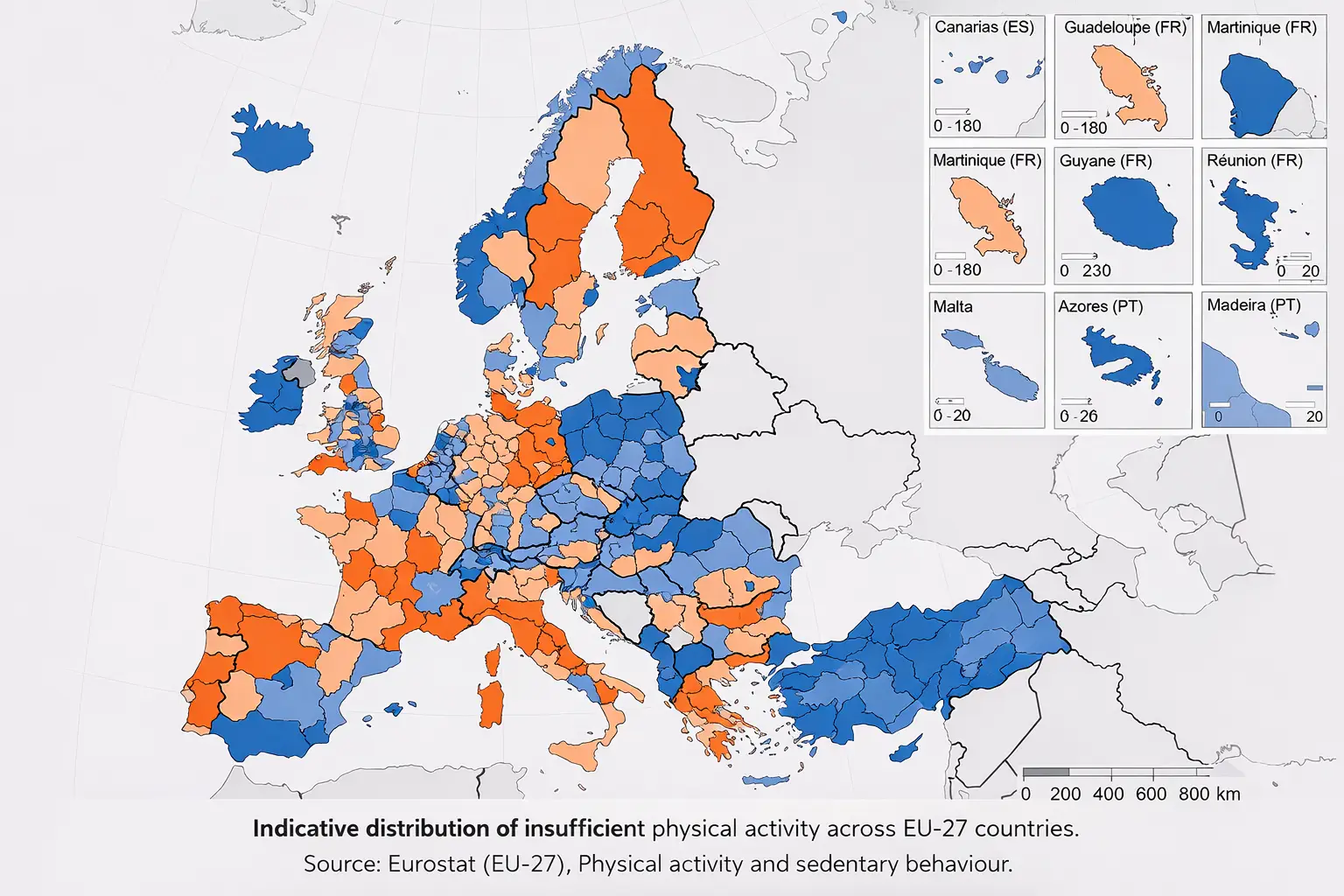
Across Europe, decades of research have shown that physical activity, social participation, and functional ability in later life are strongly influenced by factors that lie well beyond personal choice. These include how cities are designed, how work is organised across the life course, how prevention is funded, and how health and social care systems prioritise long-term well-being.
When environments make movement difficult, unsafe, or time-consuming, even the most motivated individuals struggle to remain active. When prevention is treated as optional rather than foundational, inequalities widen and health systems absorb avoidable costs later in life.
At Kinesis Innovation Center (KIC), we start from a different premise: healthy ageing is a structural outcome, not a personal achievement.
From Behaviour to Systems
Physical activity is one of the most powerful determinants of healthy ageing. It supports mobility, cognitive function, mental health, and independence. Yet despite overwhelming evidence, physical inactivity remains widespread, particularly among older adults.
This is not because people are unaware of the benefits. It is because daily movement is shaped by systems such as:
- Work environments that prioritise productivity over long-term health
- Urban and transport systems that discourage walking and active mobility
- Health systems that reward treatment more than prevention
- Policy cycles that favour short-term outcomes over long-term resilience
As long as physical activity is framed as a lifestyle “choice,” responsibility is shifted to individuals, while the systems that constrain those choices remain unexamined.
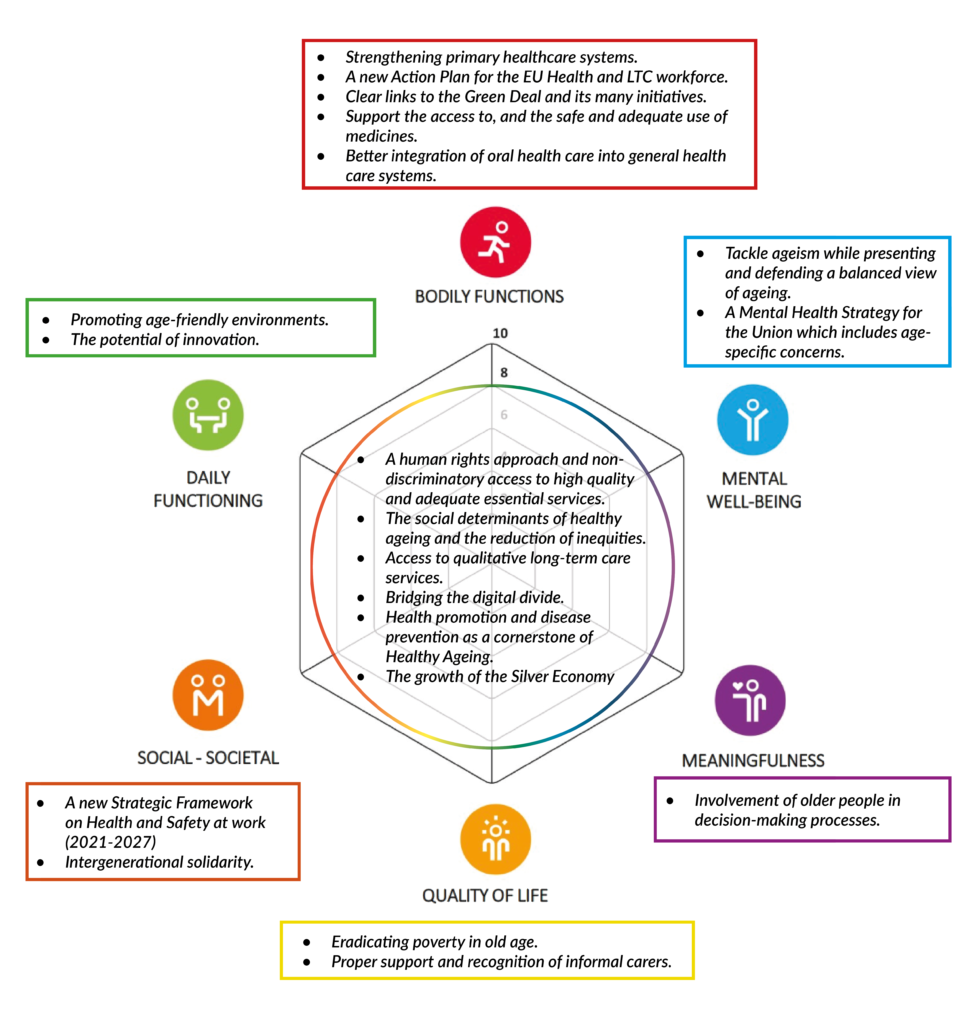
Why Prevention Struggles to Compete
One of the paradoxes of modern health systems is that prevention is widely endorsed but weakly implemented. Preventive action often delivers benefits over years or decades, while political, funding, and organisational cycles operate on much shorter timelines.
As a result:
- Preventive interventions remain fragmented
- Evidence is underused in decision-making
- Research findings struggle to translate into sustained action
Healthy ageing policies frequently focus on managing decline rather than designing conditions that delay or prevent it.
A Systems Approach to Healthy Ageing
Kinesis Innovation Center was established to address this gap between evidence and implementation. Rather than operating as a single project or network, KIC functions as a translational platform connecting research, policy, and real-world practice.
Our work focuses on:
- Embedding physical activity into health, work, and community systems
- Supporting living labs where interventions are tested under real conditions
- Translating scientific evidence into policy-relevant insights
- Strengthening prevention as a long-term societal investment
This approach recognises that healthy ageing cannot be achieved through guidelines alone. It requires coordinated action across sectors, informed by evidence and sustained beyond individual initiatives.
Looking Forward
Europe faces profound demographic change. How societies respond will depend not on how strongly we encourage individuals to “live better,” but on how effectively we design systems that enable people to age well.
This is the challenge KIC is addressing — and the opportunity ahead.
Kinesis innovation center
Reframing Responsibility
Shifting from lifestyle narratives to systems thinking does not remove individual agency. Instead, it reallocates responsibility more fairly — from individuals alone to the environments, institutions, and policies that shape everyday life.
When systems support movement, social participation, and prevention:
- Healthy choices become easier
- Inequalities are reduced
- Health systems become more sustainable
Healthy ageing then becomes not an exception, but the norm.